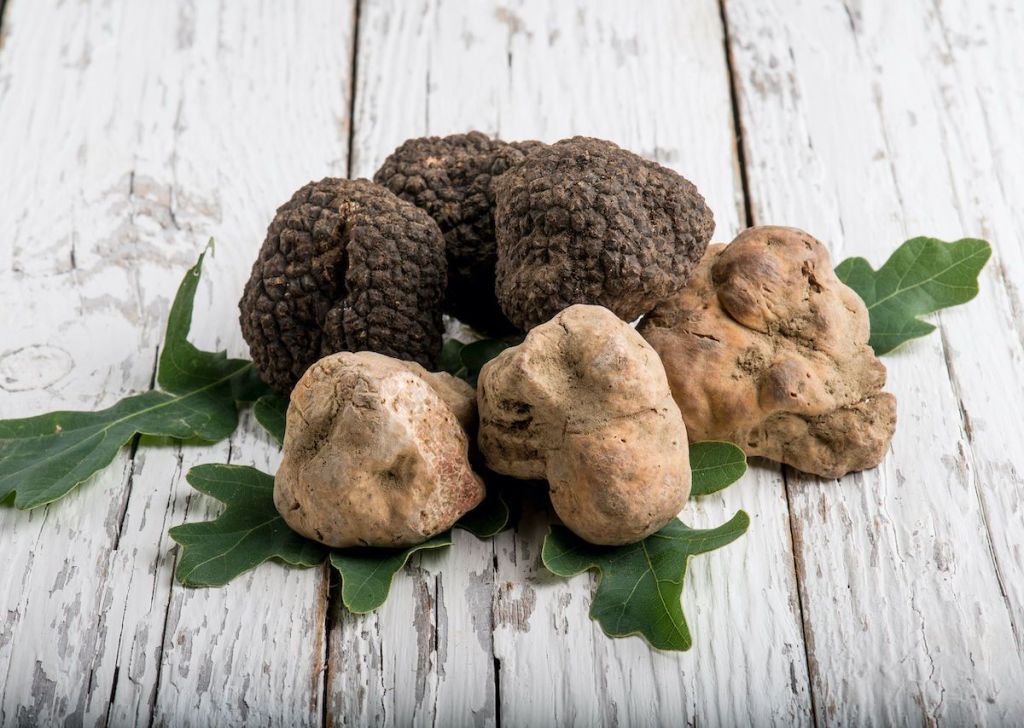
Introduction: The Tale of Two Tubers
In Istria, truffles aren’t just food; they are an obsession. But if you’re new to the peninsula, the menu might look like a puzzle of “Crni” (Black) and “Bijeli” (White) labels. While both grow in the same damp soil of the Motovun Forest, they are as different as night and day. One is the everyday hero of our konobas, while the other is a rare, fragrant ghost that appears only when the mist settles over the Mirna valley.
The Sophisticated Bijeli (White Truffle)
The Istrian White Truffle (Tuber magnatum pico) is the crown jewel of the Adriatic.
- The Look: It has a smooth, yellowish-ochre exterior and a pale, marbled interior.
- The Scent: This is where the magic is. It is intensely aromatic—think garlic, honey, and old oak—but delicate in flavor.
- The Rule: You never cook a white truffle. It is always shaved raw over hot food—typically fuži pasta or simple scrambled eggs—at the very last second so the steam can release its volatile oils.
- The Price: Because it cannot be farmed and is extremely rare, expect to pay up to €3,000 per kg during peak season.
The Versatile Crni (Black Truffle)
The Black Truffle (Tuber aestivum or Tuber melanosporum) is our year-round reliable friend.
- The Look: Warty and dark on the outside, with a firm, dark brown or black interior.
- The Flavor: Unlike the white truffle, the black truffle’s flavor actually intensifies when heated. It is earthy, nutty, and savory (that classic “umami” taste).
- The Use: It’s perfect for risottos, sauces, and meat dishes like Istrian beef (boškarin) steak.
Planning your Istrian adventure? Explore our Istria Food & Wine Guide or browse our Things to Do in Istria.
 Istria.me
Leave a comment