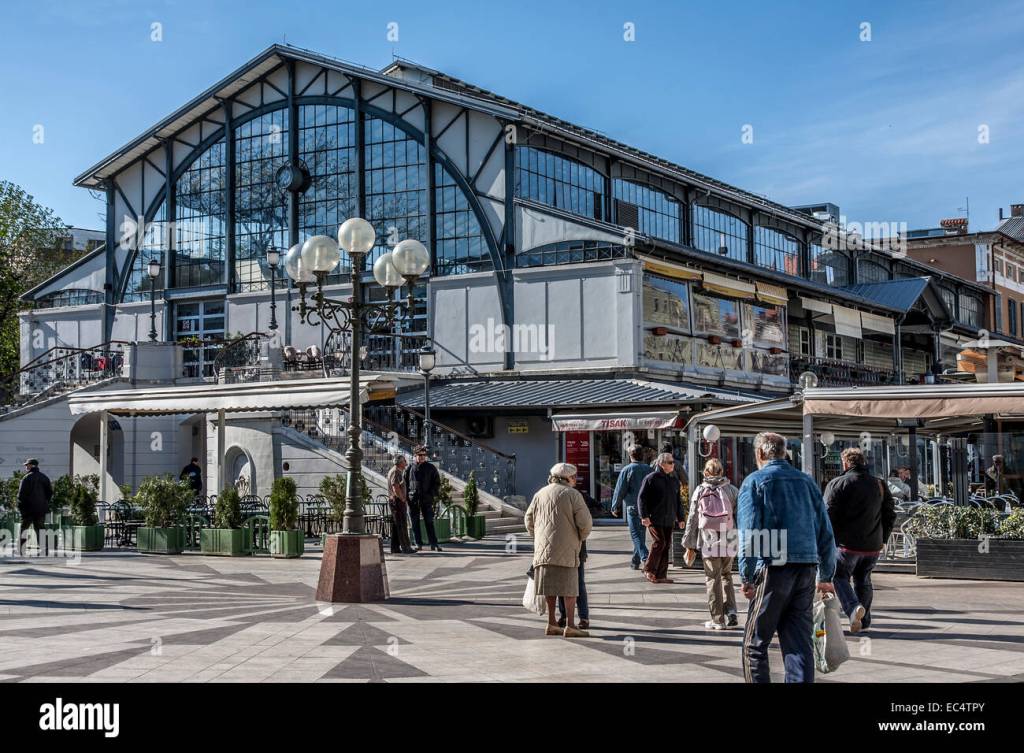
There’s a rhythm to mornings in Pula that you won’t find in any guidebook. It starts early, when the stone streets are still cool and the Adriatic light is soft and golden. Follow the locals — not toward the Arena or the Temple of Augustus, but toward the iron-and-glass hall just off the Forum — and you’ll find yourself at the beating heart of the city: the Pula Central Market, or Tržnica.
A Building With History
The market hall dates back to 1903, built during the Austro-Hungarian era, and it still carries that elegant, industrial charm. Wrought-iron columns hold up a vaulted roof that floods the interior with natural light. Step inside and the temperature drops a few degrees — a welcome relief in summer — while the sounds of vendors calling out prices and neighbours catching up over coffee fill the space.
What You’ll Find Inside
The ground floor is where the action is. Fish vendors display the morning’s catch on beds of ice — brancin (sea bass), orada (gilt-head bream), sardines so fresh they still shimmer. Nearby, butchers offer Istrian pancetta and kobasice, the region’s beloved cured sausages. But the real treasures are at the smaller stalls: wheels of sheep’s cheese from the Istrian interior, jars of amber honey, bottles of olive oil pressed from local Buža and Istarska Bjelica olives, and — if you’re visiting between October and January — those legendary Istrian truffles.
Outside: The Open-Air Stalls
Spilling out around the main hall, the open-air section is where farmers from surrounding villages sell seasonal produce directly. In spring, look for wild asparagus and tender young artichokes. Summer brings fat, sun-warmed tomatoes and fragrant peaches. Autumn is all about grapes, figs, and chestnuts. There’s no packaging, no barcodes — just a handwritten cardboard sign and a vendor who can tell you exactly which hillside the fruit came from.
More Than Shopping
What makes the Pula Market special isn’t just the food — it’s the culture surrounding it. The small cafés tucked along the market’s perimeter are packed by mid-morning with locals sipping macchiatos and debating the day’s news. Grab a coffee, pick up a warm burek from one of the bakeries nearby, and settle in. This is where Pula feels most alive, most itself.
Tips for Visiting
The market is open every day, but Saturday morning is the main event — that’s when the selection is widest and the atmosphere is at its best. Arrive before 9 a.m. for the freshest picks. Bring cash (many vendors don’t take cards) and a reusable bag. If you’re self-catering, this is the best place in the city to stock up. And even if you’re not, it’s worth the visit just to soak in the atmosphere and taste something you won’t find in any supermarket.
The Pula Market isn’t a tourist attraction dressed up for visitors. It’s the real thing — a living, breathing part of daily life in Istria’s largest city. Go early, go hungry, and let the market set the pace for your day.
Planning your Istrian adventure? Check out our Things to Do in Istria or explore our Istria Food & Wine Guide.
 Istria.me
Leave a comment