If you’ve spent any time in Istria between September and January, you already know it — that unmistakable earthy aroma drifting from restaurant kitchens, the hushed conversations among locals about who found what and where, the quiet pride of a region that considers itself one of the world’s great truffle territories. And honestly? It’s not wrong.
I’ve lived here long enough to watch truffle season come and go many times, and every year it still gets me. There’s something about those first cool autumn mornings, the mist sitting low over the Mirna River valley, the sound of dogs crashing through undergrowth — that’s when you know the season has truly arrived.
When Is Truffle Season?
The short answer: it depends on which truffle you’re after. Istria is home to several varieties, and each has its own window.
The white truffle (Tuber magnatum) is the star of the show. The season runs from late September through December, with October and November being the peak months. This is the truffle that draws international attention — the one with the intense, complex aroma that can fill an entire room. When people talk about Istrian truffles in reverential tones, this is what they mean.
The black truffle (Tuber melanosporum) has a longer season, stretching from November through March. It’s less dramatically aromatic than its white counterpart but offers a deeper, more subtle earthiness that works beautifully in cooked dishes. Many locals actually prefer it for everyday cooking — it’s more forgiving and versatile in the kitchen.
Then there’s the summer black truffle (Tuber aestivum), which appears from May through September. It’s milder and more affordable, making it a great introduction if you’re new to truffles. You’ll find it shaved over pasta and eggs at restaurants throughout the warmer months.
Where to Find Them
Now, nobody who hunts truffles is going to give you their exact spots. That’s just not how it works — truffle locations are family secrets passed down through generations. But I can point you in the right direction.
The Mirna River valley is the heart of Istrian truffle country. The area around Motovun, Livade, and Buzet provides the ideal conditions: oak and hazelnut forests, the right soil composition, and the moisture from the river. Livade in particular has become something of a truffle pilgrimage site — it’s home to the famous Zigante restaurant, where Giancarlo Zigante built an empire after his dog Diana unearthed a 1.31 kg white truffle back in 1999, one of the largest ever recorded.
The forests around Buzet — often called the “City of Truffles” — are another prime hunting ground. Every autumn, Buzet hosts truffle festivals and events, and the surrounding hills are dotted with family-run truffle operations that have been working the same land for decades.
The woodlands near Oprtalj and Grožnjan are worth knowing about too. These hilltop villages sit above forested valleys where truffle hunters have worked since long before tourism discovered the region. It’s quieter up here, more authentic — exactly the kind of Istria I love.
Going on a Truffle Hunt
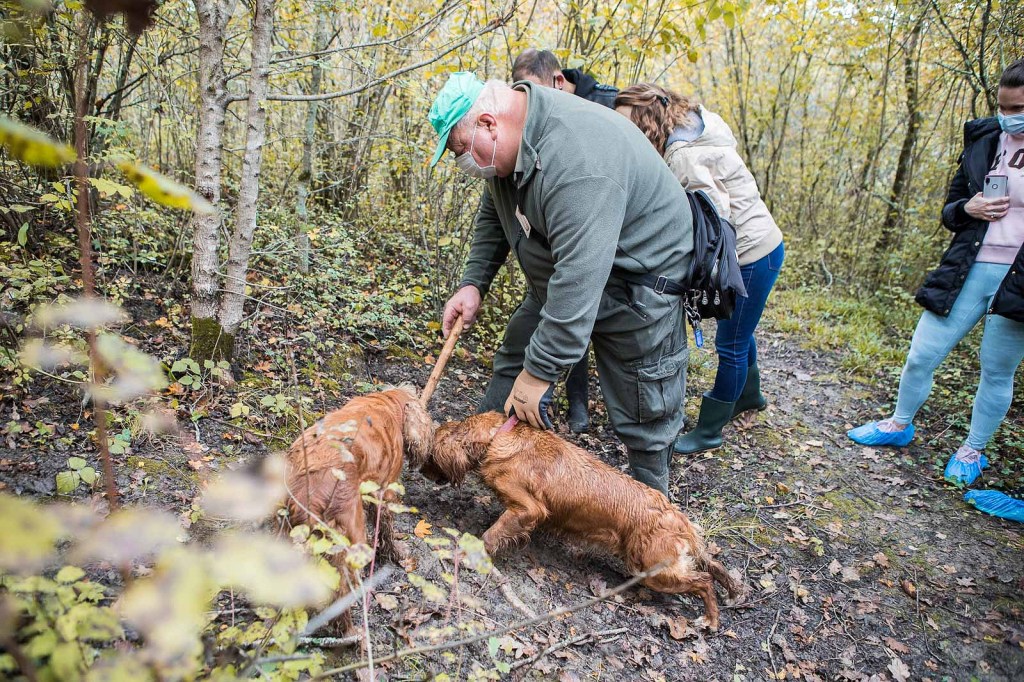
The best way to experience truffle season isn’t in a restaurant — it’s in the forest. Several local families now offer guided truffle hunts where you walk with an experienced hunter and their trained dogs through the oak forests. You learn to read the landscape, understand what the dogs are doing, and if you’re lucky, you’ll watch a truffle come out of the ground right in front of you.
A few things to keep in mind: wear proper shoes (the forest floor is uneven and often muddy), go early in the morning when conditions are best, and don’t expect a guaranteed find. Truffles are wild — that’s the whole point. Some mornings you come back with a bag full; others, you get a long walk and a good story.
Most guided hunts end with a meal where the freshly found truffles are prepared simply — shaved over scrambled eggs, folded into homemade pasta, or drizzled with local olive oil on bruschetta. It’s as good as food gets.
What Locals Know
A few insider tips that might save you from tourist-trap truffle experiences:
First, if someone is selling “Istrian white truffles” in July, walk away. The season doesn’t work like that. Second, the best truffle products — oils, spreads, sauces — come from small producers, not factory operations. Look for names like Karlić, Zigante, and Prodan on the labels, or better yet, buy directly from the families at local markets.
Third, don’t overlook the black truffle. Visitors often fixate on the white because of its prestige and price, but the black truffle is what most of us cook with at home. It’s more forgiving, holds up to heat better, and honestly, in a rich fuži pasta with some good Istrian olive oil, it’s perfection.
Finally, if you’re here during peak season — October and November — make time for the truffle festivals. The Truffle Days in Livade and the Buzet Subotina festival aren’t just tourist events; they’re genuine community gatherings where locals come together to celebrate something that has been part of life here for generations.
Truffle season is one of those times when Istria feels most like itself — unhurried, generous, deeply connected to the land. Whether you come for a guided hunt, a long lunch at a konoba, or just to breathe in the autumn air along the Mirna valley, you’ll understand why this little corner of the world takes its truffles so seriously.
Planning your Istrian adventure? Explore our Istria Food & Wine Guide or browse our Things to Do in Istria.
 Istria.me
Leave a comment