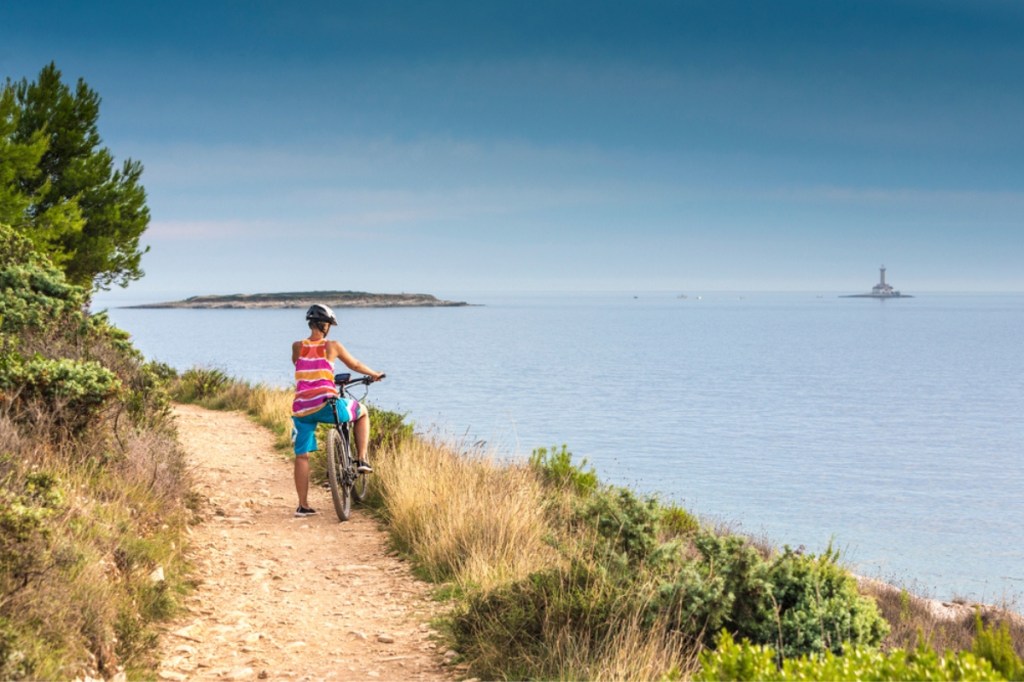
There’s a magic that happens when you understand a place — not from a guidebook, but from living in it. Istria casts that spell on everyone who arrives. Whether you come for the wines, the truffles, the turquoise coast, or the hilltop villages that seem suspended in time, you’ll find yourself returning, again and again. This is our guide to getting it right on your first trip.
Welcome to Istria: a peninsula where ancient Roman roads meet Mediterranean cypress trees, where family-run wineries pour wines that win gold medals, where truffles hide beneath oak leaves and turn a simple pasta into something unforgettable. Across just 6,000 square kilometers, you’ll encounter 2,000 years of history, some of Europe’s best food, world-class olive oil, and a coastline that takes your breath away. We call it the “truffle-wine-coast” trifecta — three reasons to never leave.
Quick Facts About Istria
Country: Croatia (northwestern peninsula)
Capital: Pula (largest city, 55,000 people)
Population: ~200,000
Language: Croatian (English widely spoken in tourist areas)
Currency: Croatian Kuna (HRK, ~1 EUR = 7.5 HRK) — most places take cards
Time Zone: Central European Time (CET) / UTC+1
Best Time to Visit: April–June (spring) or September–October (autumn)
Flights to: Pula Airport (PUY), 10km south of Pula
Driving: Right side of the road
Phone Prefix: +385 (country code)
Table of Contents
- Getting There & Getting Around
- When to Visit: Seasons in Istria
- Where to Stay: Regions & Towns
- Food & Wine: The Heart of Istria
- Best Towns & Villages
- Things to Do: Culture, Nature & Adventure
- Practical Tips for Travelers
Getting There & Getting Around
Getting to Istria
By Air: Fly into Pula Airport (PUY), which receives direct flights from most European capitals. The airport is 10km south of Pula, with bus and taxi options. Alternatively, Venice or Ljubljana airports are roughly 2 hours away and sometimes offer cheaper fares.
By Car: If you’re in Europe, driving through Slovenia takes you straight to Istria’s northern tip. The highways are excellent, and borders within the EU are seamless.
By Bus: Flixbus and local operators connect Istria to Zagreb, Venice, and Ljubljana.
Getting Around Istria
Rent a car. This is non-negotiable if you want to explore properly. Istria’s roads are excellent, scenic, and safe. You’ll need a car to visit wineries, truffle forests, and hilltop villages that buses don’t reach. Budget €30–50 per day for a compact car.
Taxis and ride-sharing: Available in larger towns but pricey for long distances. Good for getting around Pula or Rovinj at night.
Buses: Useful for traveling between major towns, but limited for countryside exploration.
Ferries & Boating: For experiencing the coast properly, consider a gulet charter or private boat rental. Our comprehensive 30-day boating itinerary covers routes from Pula southward, though Istria’s western coast has its own magnificent cruising grounds.
When to Visit: Seasons in Istria
Spring (April–May): Wildflowers & Early Truffles
Spring arrives like an awakening. The hillsides explode with wildflowers, the mistral winds blow away the winter chill, and the coast becomes swimmable. This is when restaurants open their terraces, and the light becomes liquid gold. For truffle lovers, spring black truffles are at their peak. The villages are alive but not yet mobbed.
Summer (June–August): Beaches & Crowds
Summer is high season. The coast is perfect for swimming, restaurants are fully booked, prices spike, and Rovinj becomes shoulder-to-shoulder with visitors. If you love the sea and don’t mind crowds, come in June or early September rather than July or August. The beaches at Rabac on the eastern coast are less crowded than the west.
Autumn (September–October): Harvest & Wine
This is our favorite time — and many travelers’ too. September weather is still warm, the sea is at its peak temperature, but summer crowds have evaporated. October brings the truffle and olive oil harvest, turning inland Istria into a festival of flavors. Prices drop, restaurants focus on local seasonal food, and the light takes on an amber quality that makes photographers weep. Truffle season peaks in autumn, and the vineyards explode with activity.
Winter (November–March): Quiet & Wine
Winter is gentle in Istria — rarely freezing, occasionally snowy in the hills. Many tourist facilities close, but restaurants and wine bars stay open for locals. Hotel prices drop by 40–50%, and you’ll have villages to yourself. It’s the season for wine tastings, white truffles (December–January), and understanding what Istrian life actually looks like.
Where to Stay: Regions & Towns
Coastal Istria: Rovinj, Poreč & Beyond
If you want Mediterranean charm, turquoise water, and excellent restaurants, stay on the coast. Rovinj is the golden goose — beautiful, walkable, pricey, and always packed. Poreč offers Venetian architecture and the stunning Euphrasian Basilica. For something quieter, try the small villages and fishing harbors.
Vrsar is a sculptor’s town perched above the dramatic Lim Fjord — less touristy than Rovinj but equally rewarding. Fažana is the gateway to the Brijuni Islands, a fishing harbor most tourists overlook.
Hilltop Villages: Wine Country
Head inland and you’ll find villages that feel like they’ve been waiting for you to arrive. Stone houses clinging to hillsides, cypress-lined roads, and tiny piazzas where time moves differently. These are where Istrian wines grow and truffles hide. Momjan is the village where wine dreams come true — literally, it’s one of Europe’s highest wine-producing villages and the heart of our red wine country. Grožnjan is an artist’s colony. Motovun rises dramatically above vineyards.
Eastern Coast: Kvarner Bay
The eastern edge of Istria overlooks the Kvarner Bay and feels distinct from the western coast — less touristy, more rugged, with excellent swimming. Rabac is the pearl of Kvarner Bay, offering turquoise coves and a gentler pace. The historic hilltop town of Labin above it is worth exploring.
Northern Tip: From Savudrija to the Wine Roads
Savudrija is Istria’s northernmost point, home to the oldest Adriatic lighthouse — a rocky, wild place where tourism hasn’t quite arrived. From here, the Istrian Wine Roads guide you through the best self-driving wine tours, leading south through Buje, Brtonigla, and the truffle-rich interior.
Food & Wine: The Heart of Istria
Food in Istria isn’t a tourist experience — it’s a way of life. Everything on your plate comes from somewhere local, and the cook probably knows the person who grew it.
Wine: The Golden & Bold Trifecta
Istrian wine punches above its weight globally. We produce just three percent of Croatia’s wine, yet our wines are the ones that win gold medals and get poured in Michelin-starred restaurants from London to Tokyo.
White Wine — Malvazija: Malvazija is the golden nectar of Istrian whites, with citrus brightness, minerality, and a finish that lingers. It’s the pairing wine for almost everything you’ll eat here.
Red Wine — Teran: Teran is the bold red heart of Istria — an indigenous variety that only thrives in our terra rossa soil. Dark, spicy, mineral-driven, it’s unlike any wine you’ve tasted.
Wine Touring: Don’t just taste at home — visit the producers. Our guide to the top 10 wineries in Istria includes family-run estates where the owner will pour you a glass and tell stories that get better with each sip. For a structured approach, follow the Istrian Wine Roads — a complete guide to self-driving tours that connect producers across the peninsula.
Truffles: The Black & White Magic
Truffles are the ingredient that makes you understand Istria at a cellular level. A shaving of truffle over simple pasta transforms it into something transcendent — earthy, aromatic, unforgettable.
We have both: white truffles (the more aromatic, winter ones) and black truffles (earthy, available year-round) — here’s our Istrian perspective on the difference. The best place to experience truffle magic? Livade, the world capital of truffles, where you can visit the truffle market, taste at award-winning restaurants, and stay in farmhouses surrounded by oak forests.
Want to hunt them yourself? Our ultimate guide to truffle hunting in Istria’s forests walks you through the experience. Better to understand when they’re available? Read about truffle season — when and where to find them.
Best Truffle Restaurants: Our guide to the best truffle restaurants in Istria goes beyond the famous Zigante to reveal hidden gems where truffles are treated with reverence and creativity.
Olive Oil: Liquid Gold
Istrian olive oil is liquid gold of the Adriatic — we’ve been crowned the world’s best olive oil region for nine consecutive years. Buy directly from producers, taste the varieties, and take a bottle home that tastes like sunshine.
Want to know which oils to seek out? Read about winning olive oils from Istria you need to try.
Traditional Food & Pasta
Fuži and pljukanci are the pasta traditions of Istria — hand-rolled noodles that catch sauce like nothing else. You’ll eat them with truffle, with wild boar ragù, with seafood.
Experience the source of fresh, local food at Pula Market in the morning — the beating heart of Istrian food culture. Arrive early, watch locals fill their baskets, taste seasonal vegetables, cheeses, and fish directly from the people who caught or grew them.
Best Towns & Villages
The Coast: Rovinj, Poreč & Small Harbors
Rovinj: The postcard town. Venetian architecture, narrow alleys, boats bobbing in the harbor. Yes, it’s touristy. Yes, it’s worth it. Stay in the old town, eat fresh fish, watch the sunset from the church steps.
Poreč: The cultural capital. Home to the stunning Euphrasian Basilica (UNESCO site) and a more laid-back vibe than Rovinj.
Beyond the Big Names: Vrsar is the sculptor’s town perched above the dramatic Lim Fjord — with a sculpture park and a quieter, more authentic experience. Fažana is the gateway to the Brijuni Islands, a fishing harbor where the ferries depart but the town itself rarely gets crowded. Rabac on the eastern coast is the pearl of Kvarner Bay — turquoise swimming, fewer tourists, and the historic town of Labin perched above.
The Hilltops & Wine Villages
Grožnjan: An entire artist’s colony hidden in the hills. Galleries, studios, music festivals, and a bohemian energy that contrasts sharply with the touristy coast.
Motovun: Rising dramatically above vineyards, Motovun is Istria’s most cinematic hilltop village. The annual film festival draws international crowds in summer.
Momjan: The village where wine dreams come true — literally one of Europe’s highest wine-producing villages and home to the Teran that has made Istrian wines famous.
The North: From Savudrija to the Interior
Savudrija is Istria’s northernmost point, home to the oldest Adriatic lighthouse. A wild, rocky place where you feel like you’ve reached the edge of the known world. Buje, Brtonigla, and Hum (the smallest town in the world, according to some definitions) nestle in the wine region north of everything.
Truffle Country: Livade & the Forest Villages
Livade is the world capital of truffles — where the truffle market operates year-round, restaurants elevate truffles to an art form, and you can stay in farmhouses surrounded by oak forests.
Things to Do: Culture, Nature & Adventure
Historical & Cultural
- Pula Amphitheater: One of the world’s best-preserved Roman amphitheaters, built in the 1st century AD. Still hosts concerts and events.
- Euphrasian Basilica (Poreč): A UNESCO World Heritage site with Byzantine mosaics that glow in afternoon light.
- Brijuni National Park: Former presidential residence of Tito, now an island park with Roman ruins, Italian villas, and boat tours. Ferry from Fažana.
- Grožnjan Art Colony: Studios, galleries, and a bohemian vibe in a perfectly preserved hilltop village.
- Motovun Film Festival: (August) International indie film festival in a stunning medieval setting.
Food & Wine Experiences
- Winery Visits: Visit the top 10 wineries in Istria and follow the Wine Roads for self-guided tours.
- Truffle Hunting: Hunt truffles in Istria’s forests with trained dogs and guides.
- Olive Oil Tastings: Visit producers and understand why we’ve won the world’s best olive oil region nine years running.
- Pula Market: Arrive at Pula Market in the morning and taste the seasonal ingredients that define Istrian cooking.
- Truffle Dining: Eat at the best truffle restaurants in Istria and understand why this ingredient transforms simple pasta into poetry.
Outdoor & Adventure
- Swimming & Beaches: Rabac offers turquoise coves and less crowded beaches. Also try the rock beaches at Rovinj or the quieter southern coast near Premantura.
- Boat Charter: Consider a comprehensive boating itinerary from Pula southward along the Dalmatian coast.
- Hiking & Biking: The interior is perfect for cycling through vineyards and forest villages.
- Kayaking: The Lim Fjord offers pristine kayaking through limestone cliffs.
- Diving & Snorkeling: Crystal-clear waters with underwater Roman ruins and marine life.
Practical Tips for Travelers
Language
Croatian is the local language. English is widely spoken in tourist areas, especially among younger people and in restaurants. Learning a few basics (hello, thank you, goodbye) will earn you smiles. A phrasebook or translation app helps in smaller villages.
Money & Tipping
Currency: Croatian Kuna (HRK). Most places take Visa/Mastercard, but always carry some cash for small vendors and rural areas. ATMs are ubiquitous in towns. Tipping: Not obligatory, but rounding up or leaving 10% for good service is appreciated. In rural restaurants, even coins are fine.
Driving
Drive on the right. Speed limits are 130 km/h on motorways, 90 km/h on main roads, 50 km/h in towns. Seat belts mandatory. Drink-drive limit is 0.05%. Petrol stations are everywhere. Road conditions are excellent. Tolls apply on motorways (pay cash or card at booths).
Phone & Internet
Buy a local SIM card from Telemach, A1, or Vodafone for cheap mobile data. WiFi is reliable in towns and tourist facilities. Calling home: use WhatsApp or Skype to avoid roaming charges.
What to Pack
- Spring/Autumn: Light layers, a good windbreaker (the bura wind can be fierce), sturdy walking shoes, sun protection.
- Summer: Swimsuit, hat, sun cream (essential), light clothing, sandals.
- Winter: Warm layers, waterproof jacket, comfortable shoes (stone streets get slippery).
- Year-round: Reusable water bottle, comfortable shoes for exploring old towns (cobblestones), a good camera.
Best Restaurants & Food Philosophy
Skip the touristy front-of-house restaurants in Rovinj. Ask locals where they eat. Look for “konobas” — traditional taverns run by families, where the wine is poured from a barrel and the pasta is made in the kitchen. Lunch is typically noon–3pm; dinner 7–11pm. Restaurants may close between seasons. Dress code is casual; Istria values substance over pretense.
Traveling Responsibly
Istria is fragile — stunning but increasingly crowded. Here’s how to travel responsibly: shop at local markets rather than supermarkets; eat at family restaurants rather than chains; stay in family-run accommodations; visit during shoulder seasons if possible; and remember that truffles, wine, and olive oil aren’t infinite resources. Taking care of this place ensures future travelers can fall in love with it too.
Your Istria Awaits
There’s a moment that happens on every Istria trip — usually around day three or four. You’re eating something simple — maybe just pasta with truffle shavings, or grilled fish with olive oil and lemon — and you look out at the coast or across a vineyard, and you understand. You understand why people keep coming back. Why they buy property. Why they fall in love here. Why the locals defend this place so fiercely.
Istria doesn’t give you its treasures all at once. It reveals them slowly, to people who slow down enough to notice. Come for the wine. Stay for the people. Leave with a piece of your heart behind.
We’ll see you soon. There’s a glass of Malvazija waiting, and a table is being set.
 Istria.me
Leave a comment