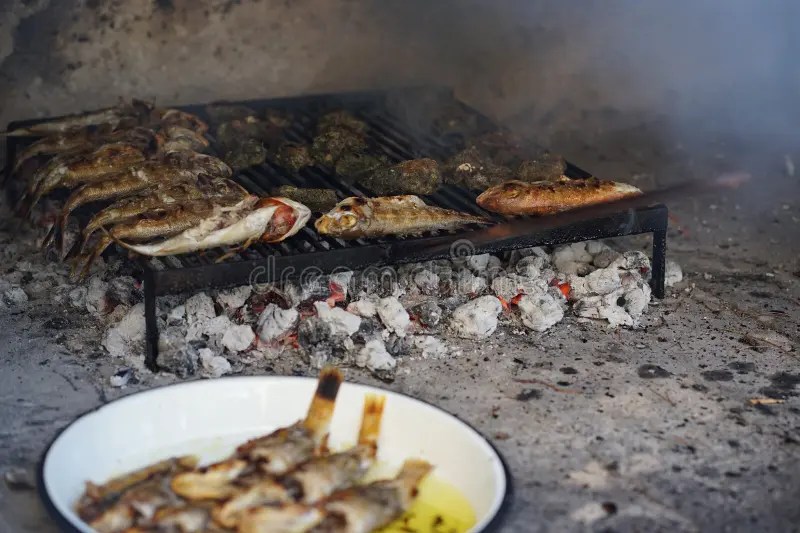
The Adriatic Sea is shallower, saltier, and colder than most people expect. It’s also one of the most productive fishing grounds in the Mediterranean basin, and Istria — tucked into the northern tip of the peninsula where the sea is at its most concentrated — has been pulling extraordinary seafood from it for millennia. When you eat fish in Istria, you are almost certainly eating something that was alive in the sea less than 24 hours ago. That’s not marketing. That’s just geography.
This guide covers the essential Istrian seafood: what the key species are, how they’re traditionally prepared, where to eat them well, and a few things worth knowing before you sit down at a waterfront konoba and start ordering.
What Makes Adriatic Seafood Different
The northern Adriatic is unusually rich in nutrients thanks to freshwater input from rivers like the Po and the Soca, which creates a highly productive environment for shellfish and bottom-dwelling fish. The water is also colder than the southern Mediterranean, which means fish grow more slowly and develop more flavour. A branzino from the northern Adriatic tastes noticeably different from one farmed in a southern sea cage — firmer, more complex, with a clean minerality that reflects the water it came from.
Istrian fishermen have traditionally worked small boats close to shore, using methods — trammel nets, longlines, octopus pots — that are selective enough to avoid the wholesale destruction of the seabed that industrial trawling causes. The result is a fishing tradition that’s survived largely intact and a seafood supply that’s genuinely sustainable by Mediterranean standards.
The Fish You Need to Know
Branzino (Sea Bass) — Lubin in Croatian
The king of Istrian fish cookery, and the one most likely to appear on restaurant menus. Wild Adriatic branzino has a clean, delicate flavour and fine white flesh that responds beautifully to simple cooking — grilled whole over an open fire with olive oil, garlic, and a squeeze of lemon is the Istrian default, and it’s perfect. Anything more elaborate risks getting in the way.
Ask your server whether the fish is wild (divlji) or farmed (uzgajani). Both will be good, but wild fish from local waters has a depth of flavour that farmed simply can’t match.
Orada (Gilt-Head Bream) — Komarca in Croatian
If branzino is the king, orada is its close rival. Slightly sweeter and more robust than sea bass, it’s equally well-suited to grilling whole and equally likely to appear on every menu in the region. The characteristic gold mark between the eyes gives it its Italian name. In Istria, it’s often baked in a salt crust — a technique that steams the fish in its own juices while the salt crust seals in moisture. The result is extraordinary.
Dentex — Zubatac in Croatian
Less well-known outside the Adriatic, dentex is a larger, firmer-fleshed fish with a more assertive flavour than branzino or orada. It’s a predator, which means it builds up more flavour compounds in the flesh. Grilled or roasted, it holds its texture well and pairs beautifully with Istrian olive oil. When you see it on a menu, order it.
John Dory — Kovač in Croatian
The ugly duckling of the Adriatic — all giant head and spiky fins, with a body that looks like it shouldn’t produce much eating. But the white fillets that come off a John Dory are among the finest in the sea: sweet, firm, with almost no fat. In Istrian restaurants it’s usually filleted and pan-fried simply with olive oil and parsley. Don’t skip it on account of the fish’s unfortunate appearance.
Scorpionfish — Škarpina in Croatian
Another ugly genius. Scorpionfish is one of the most important fish in traditional Istrian cooking, forming the backbone of brodetto — the region’s signature fish stew (more on that below). The flesh is sweet and gelatinous, and the bones produce an extraordinarily rich stock. In fish markets it tends to be cheaper than the prestige species, which makes no sense given how good it is.
The Shellfish and Cephalopods
Adriatic Scampi — Škampi
This is non-negotiable. Istrian škampi are small, sweet, intensely flavoured Adriatic scampi — more delicate than Norwegian langoustines and with a briny sweetness that’s almost reminiscent of a good sea urchin. They’re typically served buzzara-style: cooked in a reduction of white wine, garlic, olive oil, and breadcrumbs that absorbs all the shellfish juices and becomes a sauce you’ll want to mop up with every piece of bread at the table. Škampi na buzaru is one of the defining dishes of Istrian cuisine. Order it everywhere you see it.
Mussels — Dagnje
The Lim Fjord — the narrow, fjord-like inlet on Istria’s western coast — produces some of the best mussels in the Adriatic, farmed in the cold, nutrient-rich water that flows through the canyon. They’re plumper and more intensely flavoured than most farmed mussels, and the local treatment — steamed with white wine, garlic, and a drizzle of olive oil — lets them speak for themselves. If you’re driving past Lim, stopping at one of the waterside restaurants there for a pot of mussels is almost compulsory.
Oysters — Kamenice
Also from the Lim Fjord, the local oysters have a lean, mineral quality that reflects the cold water and the tidal flow through the canyon. They’re smaller than Atlantic oysters and more intensely briny. Eaten raw with a drop of lemon on the shell, standing at the edge of the water on a sunny afternoon, they are one of Istria’s great simple pleasures.
Octopus — Hobotnica
Octopus appears in two essential forms in Istrian cooking. The first is octopus salad (hobotnica salata) — slow-cooked, sliced, and dressed with olive oil, capers, parsley, and a splash of vinegar, served as an antipasto. The second is octopus under the peka — cooked slowly under a cast-iron bell covered in embers until it’s impossibly tender, usually alongside potatoes. The peka method requires advance ordering (allow at least two hours) but produces something exceptional.
Squid — Lignje
Grilled squid (lignje na žaru) is one of the most ordered dishes on any Istrian coast. When it’s fresh — and it almost always is — it needs nothing more than a hot grill, olive oil, salt, and lemon. Fried squid rings (lignje na fritu) are the more casual version: crisp, sweet, eaten with your fingers. Both are fine. The grilled version, done properly, is better.
The Dishes Worth Seeking Out
Brodetto — The Fisherman’s Stew
Every coastal region in the Adriatic has its version of brodetto — a rich fish stew made from whatever came up in the net that morning. The Istrian version tends to be lighter and more fragrant than the versions from further down the coast, made with a base of olive oil, garlic, white wine, and tomato, finished with a handful of parsley. The key is the variety of fish: scorpionfish, sea robin, monkfish, whatever flatfish are available. A single-species brodetto is technically possible but spiritually wrong.
It’s a dish that requires time and a cook who knows what they’re doing. When you find it on a menu at a proper konoba, order it.
Crni Rižoto — Black Risotto
Squid-ink risotto is found across the northern Adriatic, and Istria’s version is among the finest. The ink gives the rice a dramatic colour and an intense, oceanic depth of flavour; the rice itself is cooked with cuttlefish or squid, olive oil, white wine, and a little garlic until it reaches that elusive Adriatic consistency — somewhere between a risotto and a very thick soup. It should be jet black, glossy, and eaten with your full attention.
Fuži s Tartufima i Škampima
The combination of Istrian pasta (fuži), scampi, and truffles appears on menus across the peninsula and represents a kind of greatest-hits of the local larder. It’s a rich, indulgent dish — the scampi sweetness, the truffle earthiness, and the egg-rich pasta all pulling in different directions and somehow arriving at harmony. Order it at least once.
Where to Eat Seafood in Istria
The short answer is: anywhere near the water, at places that look like locals eat there. The longer answer involves a few principles.
Avoid menus with photographs. This is a reliable heuristic across most of the world and applies doubly in Istria. If a restaurant needs pictures of the food to sell it, the food probably isn’t selling itself.
Ask what came in today. At good konobas, the answer will be specific. At tourist traps, the answer will be vague. The specificity of the response tells you a great deal about how the kitchen is operating.
The Lim Fjord is a detour worth making specifically for mussels and oysters. The restaurants lining the banks of the fjord are set up for exactly this purpose, and the setting — narrow canyon, green water, fishing boats — makes the meal something more than the sum of its parts.
Rovinj’s fish market opens early (be there by 7am for the best selection) and is worth visiting even if you’re not cooking. Watching the day’s catch being laid out, and seeing what the local fishermen actually caught the night before, gives you a sense of the sea’s seasonal rhythms that no restaurant menu can replicate.
A Note on Seasonality
Istrian seafood has a rhythm. Scampi are at their best in spring and autumn. Mussels and oysters peak in the colder months when the water temperature drops and they fatten up. Summer brings more squid and cuttlefish. Brodetto is a year-round dish but changes character with the season — winter versions are richer and more robust, spring versions lighter and more fragrant.
Telling a good konoba from a mediocre one is often as simple as asking whether the scampi are in season, or what fish is particularly good right now. A cook who knows the seasons is a cook who’s paying attention.
Istrian seafood is not a novelty or a tourist attraction. It’s what people here have been eating for centuries, prepared the way it’s always been prepared, from a sea that — by the grace of geography and fishing tradition — still has plenty to give. That’s a rarer thing than it used to be, and worth appreciating at every meal.
For the full picture of what to eat and drink in Istria, explore our Istria Food & Wine Guide. And if you’re planning a full trip, the Complete Istria Travel Guide has everything you need.
 Istria.me
Leave a comment