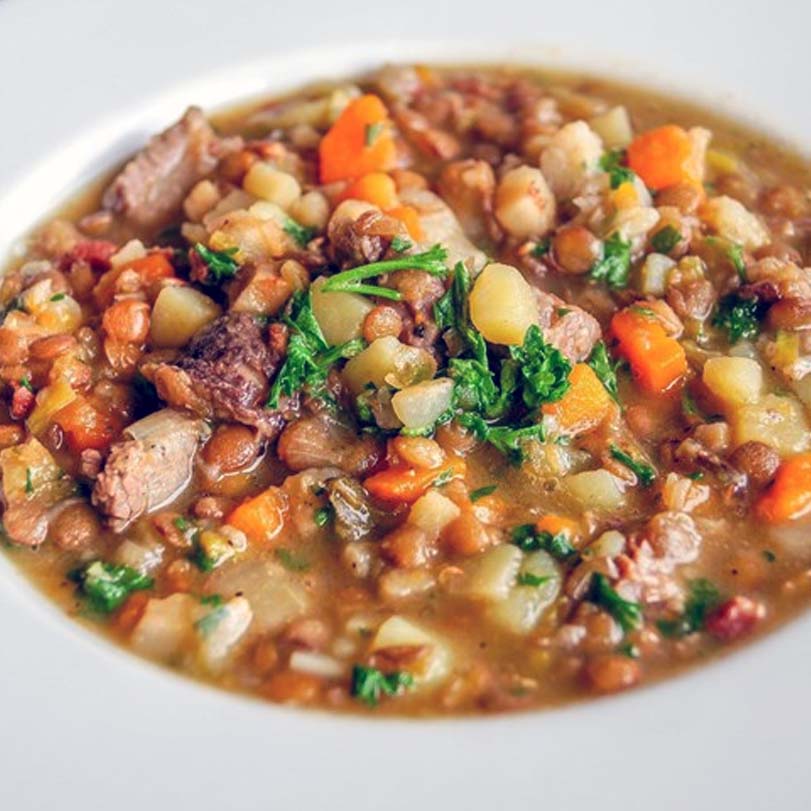
Every cuisine has a dish that tells you where you are before the waiter says a word. In Istria, that dish is maneštra. It arrives in a deep bowl, thick enough that a spoon stands in it, fragrant with pork fat and bay leaf, the beans soft and yielding against chunks of whatever vegetable was in season when it was made. It is not a glamorous dish. It doesn’t photograph well. It doesn’t appear on many tourist menus. And it is, without question, one of the most satisfying things you can eat on the peninsula.
Understanding maneštra is understanding how Istrians actually eat — not the truffle-shaved pasta of upscale agrotourism restaurants, but the everyday food of farmhouse kitchens and family Sunday lunches. If you get the chance to try it, don’t pass it up.
What Maneštra Actually Is
The name comes from the Italian minestra — soup — and that Venetian linguistic influence is itself a clue to Istria’s layered history. But while the name is borrowed, the dish is thoroughly local. At its core, maneštra is a thick bean-and-vegetable soup slow-cooked with a piece of cured or smoked pork — typically a ham hock, pork ribs, or a length of dried sausage called kobasica — until the whole thing collapses into a unified, deeply flavoured mass that sits somewhere between soup and stew.
The beans are always the backbone. Borlotti beans are most traditional, but white cannellini-style beans, chickpeas, and lentils all appear depending on the region and the household. The vegetables rotate with the season: in autumn it might be corn and pumpkin; in winter, dried beans and sauerkraut; in spring, fresh peas and new potatoes. There is no single definitive recipe. Every family has its version, and every family’s version is correct.
The Regional Variations
Maneštra od Bobića
This is the version most people mean when they say maneštra in Istria — a thick soup made with dried corn kernels (bobići) and borlotti beans. The corn gives it a slightly sweet, starchy body; the beans provide the protein and creaminess; the pork (usually a smoked hock or some spare ribs) gives depth and fat. It’s cooked for hours, the way all good bean soups are, until the corn softens and the beans start to break down at the edges and thicken the liquid.
This is classic interior Istrian food — the cuisine of the hilltop villages and working farms rather than the coastal towns. When you eat it, you understand why people survived Istrian winters.
Jota — The Triestine Cousin
In the northern part of Istria, close to the Slovenian border and the influence of Trieste, you encounter jota: a darker, more acidic version of maneštra made with sauerkraut and beans. The sauerkraut gives it a fermented tang that cuts through the richness of the pork fat beautifully. Jota has been eaten in this corner of the Adriatic for centuries — it appears in written records from the 16th century — and it remains one of the defining dishes of the region’s winter table.
The Istrian version tends to be slightly less sour than the Triestine original — a bit more bean-forward, a bit gentler on the sauerkraut — but the principle is the same. If you see it on a menu in November or December, order it without hesitation.
Maneštra with Pumpkin
The autumn harvest version, made with the dense, sweet Istrian pumpkin varieties that come in from the fields in September and October. Pumpkin maneštra is sweeter and more velvety than the corn version, with a golden colour and a softness that makes it feel almost luxurious for a peasant dish. It’s often finished with a drizzle of — you guessed it — local olive oil, which cuts through the sweetness and ties the whole thing together.
The Role of Pork
Maneštra without pork is technically possible but spiritually incomplete. The pork component isn’t just flavouring — it’s structural. The fat rendered from a ham hock or a length of smoked ribs coats the beans and vegetables, carrying flavour into every part of the dish in a way that no amount of olive oil or butter can replicate.
Traditionally, the pork used would be home-cured — prosciutto bones with some meat still on them, dried sausages made from the autumn pig slaughter, smoked ribs hung in the cellar since November. Today most home cooks use commercially produced versions of the same products, but the principle is unchanged: low-quality pork makes mediocre maneštra, and good smoked or cured pork makes transcendent maneštra.
In konoba kitchens, the pork is often removed after cooking, shredded, and returned to the pot — or served alongside the maneštra as a second course. Nothing is wasted.
How It’s Made: The Essentials
Good maneštra requires three things: time, patience, and dried beans that were soaked overnight. The shortcuts — canned beans, pressure cookers, inadequate quantities of pork — produce inferior results. The traditional method is this: soak the dried beans overnight, start them in cold water with the pork early in the morning, let the whole thing cook gently for two hours before adding the vegetables, then cook for another hour or more until everything is unified and the liquid has thickened to a near-porridge consistency.
The seasoning is restrained — bay leaf, a little garlic, sometimes a sprig of rosemary, salt at the end once you can taste what the pork has contributed. No tomato in the traditional version. No spice beyond black pepper. The flavour should come from the quality of the ingredients and the patience of the cooking, not from seasoning tricks.
It is always better the next day. This is not negotiable.
Where to Find Good Maneštra
Maneštra is not a restaurant dish in the way that grilled fish or truffle pasta are. It’s a home dish, made in large quantities, eaten over several days, and shared with family. Finding it in restaurants requires knowing where to look.
Traditional konobas in inland villages are the best bet — the kind of places where the menu is handwritten or recited verbally, where the dining room has low stone ceilings and a fireplace, and where the owner’s grandmother is possibly still involved in the cooking. In Motovun, Grožnjan, and the villages around Buzet, you’ll find konobas that serve maneštra as a first course alongside other traditional dishes.
Agrotourism farms (agroturizmi) that serve meals are another reliable source. These family-run operations typically serve a fixed menu of traditional dishes, and maneštra often appears as the soup course. The quality at the best agrotourismi is excellent — you’re essentially eating home cooking made by people who have been making it their whole lives.
Markets and food festivals in autumn — particularly the truffle festivals around Buzet and Livade — often feature maneštra as part of the traditional food offerings. Eating it outdoors in October, when the air has that first chill and the trees are turning, is a particular pleasure.
Maneštra and the Istrian Table
In traditional Istrian meal structure, maneštra functions as a first course — a substantial one that sets the tone for everything that follows. It’s typically followed by a meat dish (roast lamb, pork ribs, game in autumn) and then cheese and fruit. The soup is eaten with good bread, ideally the dense, slightly sour local style, and occasionally with a glass of young Teran red wine — the acidity of the wine cutting through the richness of the pork fat in the same way the sauerkraut does in jota.
This is not a cuisine of portion control. Istrian hospitality operates on the assumption that no guest should leave hungry, and the quantities served at a traditional table reflect that. Come hungry.
Making It at Home
If you want to recreate maneštra at home after your trip — and you will want to, because it’s the kind of dish that lingers in the memory — the key ingredients to track down are good dried borlotti beans and a smoked pork hock or some smoked ribs from a decent butcher. The rest is patience.
A simplified home version: soak 300g dried borlotti beans overnight. The next day, put them in a large pot with a smoked pork hock, cover with cold water, and bring to a gentle simmer. Cook for 90 minutes. Add two large potatoes (cubed), a handful of dried corn kernels if you can find them, a bay leaf, three garlic cloves, and enough water to keep everything submerged. Cook for another 60–90 minutes until the beans are completely soft and the liquid has thickened. Remove the pork hock, shred the meat, return it to the pot. Season with salt and black pepper. Finish with a generous pour of good olive oil. Eat the next day.
It won’t be exactly like the maneštra you had in that stone-walled konoba above Motovun. But it will be close enough to bring the memory back, and that’s what good food is supposed to do.
Maneštra is just the beginning of Istria’s traditional food story. Explore more in our Istria Food & Wine Guide, or read about the seafood that shares the traditional Istrian table.
 Istria.me
Leave a comment