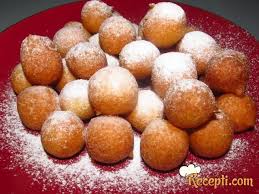
There are foods that exist in every culture specifically to be eaten in quantities that would be unreasonable at any other time of year, in the company of people you love, in weather cold enough to justify the calories. In Istria, those foods are fritule and kroštule. They appear reliably every winter — at Carnival, at Christmas markets, at family gatherings in December and January — and then, like the best seasonal things, they’re gone again. Which is part of what makes them special.
Neither pastry is complicated. Both require a hot pan of oil, a simple dough, and enough patience to let them fry properly without burning. The results are humble in ingredient and extraordinary in effect: warm, fragrant, dusted with powdered sugar, eaten standing up from a paper bag while someone refills your glass of Prošek. If you find yourself in Istria in winter, you will eat these. You will eat too many. You will not regret it.
Fritule: The Little Fritters
Fritule (pronounced “FREE-too-leh”, singular fritula) are small, round fried dough balls — the Istrian and Dalmatian equivalent of what other cultures call beignets, zeppole, or loukoumades, though every grandmother in Istria will tell you firmly that her fritule are nothing like any of those things. She’s probably right in at least a few important respects.
The dough is made from flour, eggs, sugar, a little olive oil, yeast or baking powder, and the flavourings that vary by family and region: rum, lemon zest, orange zest, vanilla, a pinch of nutmeg, sometimes a handful of raisins plumped in grappa. The batter is looser than a bread dough but thicker than a pancake batter — it drops from a spoon into the hot oil and puffs up into irregular rounds that are never perfectly spherical and are all the better for it.
They’re fried in olive oil or a neutral vegetable oil until deeply golden — not pale and anaemic, but properly coloured, with a slight crust that gives way to a soft, eggy interior. Drained briefly on paper, dusted generously with powdered sugar, and eaten immediately. They do not improve with time. They should be eaten hot.
The Rum and Raisin Question
Istrian fritule divide loosely into two camps: those with rum-soaked raisins and those without. Purists on both sides feel strongly. The raisin faction argues that the plump, rum-soaked fruit provides pockets of concentrated sweetness and moisture that make the fritula complete. The plain faction argues that raisins are unnecessary interference in a perfect dough.
Our position: both are correct depending on the context. Fritule with raisins are the definitive Christmas version. Fritule without are better at Carnival, when you want something lighter and more easily eaten in quantity. Fortunately, no rule prevents you from trying both.
Kroštule: The Carnival Ribbons
Kroštule (pronounced “KROH-sh-too-leh”, also spelled crostoli in the Italian tradition) are the architectural opposite of fritule: where fritule are round and pillowy, kroštule are flat, twisted, and shatteringly crisp. The dough is rolled thin, cut into irregular strips or rectangles, twisted or tied into loose knots, and fried until pale golden. They should be light enough to be genuinely fragile — if they don’t shatter slightly when you bite into them, they haven’t been rolled thinly enough.
The dough is enriched with egg yolks, a little grappa or rum, lemon zest, and sometimes a spoonful of sour cream, which makes it more tender and flaky. The alcohol serves a technical purpose as well as a flavouring one: it evaporates quickly during frying, creating small air pockets that contribute to the crispness. Don’t skip it.
Like fritule, kroštule are finished with powdered sugar — applied lavishly, in a quantity that ensures most of it ends up on your clothes. This is traditional and unavoidable. Wear dark colours.
The Carnival Connection
Both fritule and kroštule are inextricably linked to Carnival — the pre-Lent celebration that in Istria involves masks, processions, bonfires, and a great deal of eating and drinking before the austerities of Lent begin. The tradition of eating fried sweets before Lent is ancient and pan-European, rooted in the practical need to use up fat, eggs, and sugar before the fasting period, and the less practical but entirely human desire to celebrate before abstaining.
Istrian Carnival runs from Epiphany (January 6th) through Shrove Tuesday, with the biggest celebrations in the week before Ash Wednesday. During this period, fritule and kroštule appear at every gathering — made at home in large batches, sold at street stalls in every town, and given as gifts between neighbours in the old tradition. The smell of frying dough and powdered sugar in a cold January street is one of the more reliable sensory markers of Istrian winter.
Prošek: The Essential Accompaniment
The traditional drink alongside both fritule and kroštule is Prošek — a sweet Dalmatian dessert wine made from dried or late-harvest grapes, with a rich, honey-and-dried-fruit character that pairs perfectly with the fried sweetness of the pastries. Prošek is not widely exported and is difficult to find outside the Adriatic region, which makes drinking it in context — on a cold evening in Rovinj or Poreč during Carnival — one of those pleasures that exists only in place.
For those who prefer something less sweet, a small glass of grappa (or its Istrian cousin, loza) works equally well. The alcohol cuts through the fat of the fried dough and resets the palate for another fritula. This is the theory, at least. In practice, the palate rarely needs resetting.
Where to Find Them
During Carnival season, fritule and kroštule are everywhere — street stalls, bakeries, supermarkets, the tables outside church halls during parish events. The best versions are homemade and eaten fresh. The second-best are from a bakery that makes them daily rather than producing a large batch at the start of the week and selling them progressively more stale.
Outside of Carnival, fritule appear at Christmas markets and sometimes at summer festivals, though summer fritule lack the full context that makes the winter versions special. They’re still good — fried dough dusted with sugar is unconditionally good — but they’re not the same experience.
If you’re visiting Istria in January or February, look for local Carnival events in the towns — Pula, Rovinj, Poreč, and Buzet all have traditional Carnival celebrations with street food, processions, and the kind of communal eating that these pastries were made for.
Making Fritule at Home
If you want to make fritule after your trip, the process is approachable even for non-bakers. A basic recipe: whisk together 2 eggs with 3 tablespoons of sugar until pale. Add 100ml of milk, 2 tablespoons of rum, the zest of one lemon, and a tablespoon of olive oil. Stir in 200g of flour sifted with a teaspoon of baking powder and a pinch of salt until you have a thick, sticky batter. Fold in a handful of rum-soaked raisins if you’re in that camp. Drop teaspoon-sized portions into hot oil (175°C) and fry, turning once, until deeply golden — about 3 minutes per batch. Drain, dust with powdered sugar, eat immediately.
The ratio of flour to egg varies by recipe and produces different textures: more egg makes a richer, more custardy interior; more flour makes a firmer, breadier result. Experiment after the first batch, which will inevitably be a calibration run regardless of how carefully you follow the recipe. This is normal. The calibration batch is also delicious.
Fritule and kroštule are not sophisticated food. They don’t need to be. They are the taste of winter in Istria — of cold evenings and warm kitchens, of Carnival crowds and the particular happiness of eating something fried and sweet and shared. Some of the best things in food are exactly that simple.
Discover more of Istria’s traditional food culture in our Istria Food & Wine Guide, or read about the prosciutto and maneštra that share the Istrian winter table.
 Istria.me
Leave a comment