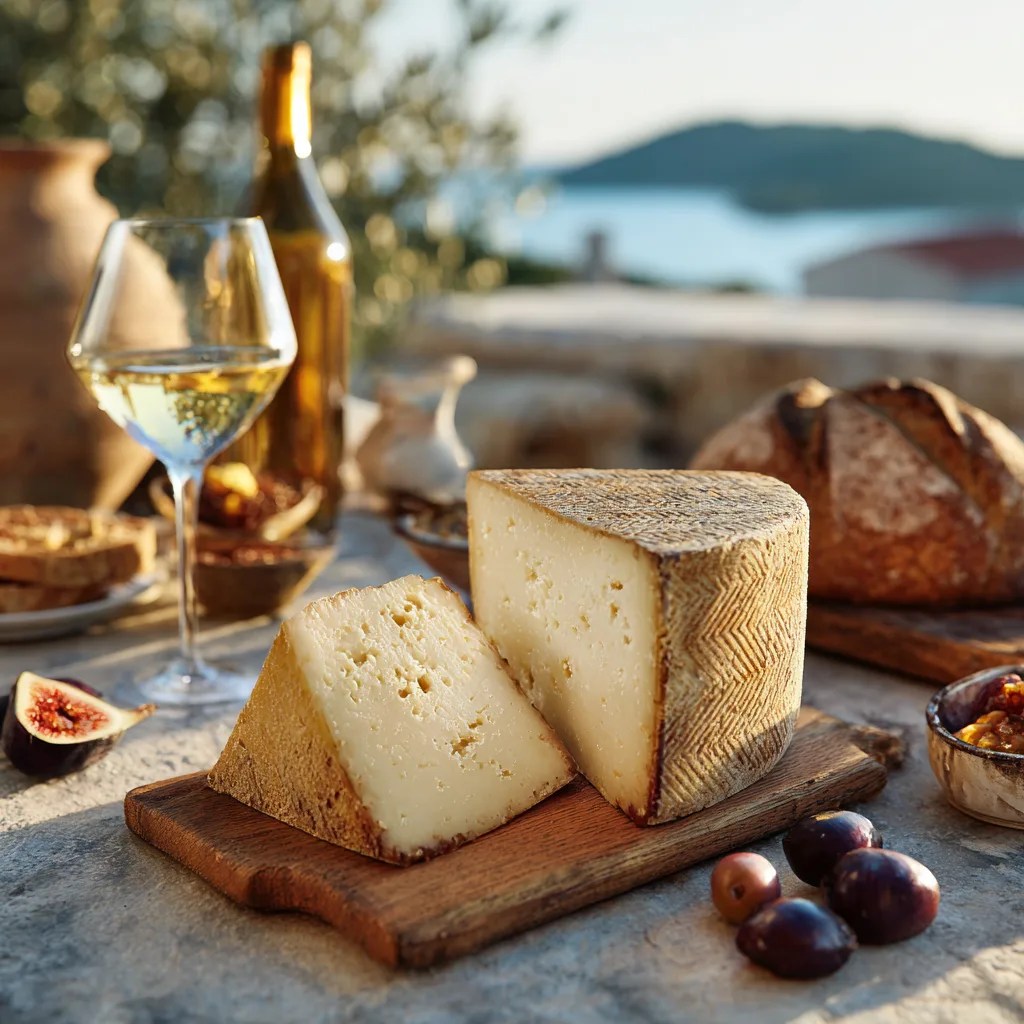
Bread, olive oil, prosciutto, a glass of Malvazija — and cheese. If there’s one thing missing from the classic Istrian table in most travel guides, it’s the cheese. Which is a shame, because the peninsula and the wider Croatian Adriatic coast produce some remarkable varieties, from hard, peppery aged rounds to the silkiest fresh cottage cheese you’ll ever eat. Here’s what to look for, where to buy it, and how locals actually eat it.
What Makes Istrian Cheese Special?
Istria isn’t famous for cheese the way it’s famous for truffles or olive oil, but that’s part of its charm. The cheeses here don’t shout — they’re part of everyday life, appearing on antipasto platters, farm tables, and market stalls without ceremony. Most are made from sheep’s or goat’s milk, sometimes cow’s, from small producers who’ve been following the same methods for generations. The flavours are shaped by the local terroir: wild herbs, salt air from the Adriatic, and the same mineral-rich soils that give Istrian olive oil its distinctive character.
Paški Sir: The Gold Standard of Croatian Cheese
Before we get to Istria’s own offerings, it’s worth talking about the benchmark that all Croatian cheese lovers know. Paški sir — sheep’s milk cheese from the island of Pag — is arguably the finest cheese produced anywhere in the former Yugoslavia. The sheep on Pag graze on rocky karst pastures swept by the Bora wind and covered in aromatic wild herbs, sage, and sea-salted grasses. The result is a cheese that’s firm, slightly crumbly, intensely savoury, and utterly unlike any supermarket sheep’s cheese you’ve tried elsewhere.
You’ll find Paški sir at every good deli and market in Istria, usually sold in different ages: younger wheels are more supple and milky, older ones dense and almost parmesan-like. We typically serve it with a drizzle of our local olive oil and a glass of Teran. The combination sounds simple but it’s extraordinary — the bitterness of the wine against the salt of the cheese, both cut through by the grassy freshness of the oil. It’s one of those things you eat once and think about for years.
Istarski Sir: Istria’s Own Aged Cheese
Istria has its own aged sheep’s milk cheese tradition, though it’s less formally defined than Paški sir’s protected designation. You’ll see it labelled variously as istarski sir, ovčji sir (sheep’s cheese), or simply by the name of the farm or village where it’s made. The best versions are rubbed with olive oil as they age, which keeps the rind supple and adds another flavour dimension — you can taste the oil in the cheese itself after a few months of maturation.
Sheep graze freely across the Istrian interior, particularly in the south around Barban and along the eastern coast. Small farms sell directly — look for handwritten signs at the roadside or ask at local markets. The cheese varies considerably from producer to producer, which is half the fun. Some wheels are mild and buttery; others have a pronounced gamey depth that lingers. What they almost all share is a cleanness of flavour that comes from animals living well on good pasture.
Skuta: The Fresh Cheese Worth Seeking Out
At the opposite end of the spectrum from aged hard wheels is skuta — fresh whey cheese made as a byproduct of sheep’s milk cheese production. Think ricotta but richer, creamier, and with a more complex flavour from the sheep’s milk. Skuta is cloud-white and cloud-soft, sold in small tubs or wrapped in cloth at farm stalls and markets across Istria.
It’s one of the most versatile things you can buy in Istrian food. We eat it sweet — drizzled with local honey, served with figs or walnut jam — and savoury, spread on bread with olive oil and a crack of black pepper, or spooned alongside roasted vegetables. In some households it goes into pasta fillings alongside herbs from the garden. If you visit a farm that produces it, ask to taste it the day it’s made. Nothing compares to completely fresh skuta.
Svježi Sir: Everyday Fresh Cottage Cheese
Svježi sir — fresh cheese, essentially cottage cheese or quark — is a staple of Croatian home cooking that tourists rarely encounter because it mostly lives inside dishes rather than on a cheese board. It’s made from cow’s milk, sold in tubs, and has a mild, slightly tangy flavour and a creamy texture. Istrian families use it in strudel fillings, spread on toast, stirred into pasta sauces for richness, or simply eaten with a spoon for breakfast with a little salt.
You can find svježi sir at any supermarket, but the best versions come from small dairies and farm shops. In Istria, look for locally produced versions in markets — they tend to be fresher and more flavourful than the commercial brands. It’s the kind of everyday food that doesn’t photograph well but quietly makes everything around it taste better.
Goat Cheese: Istria’s Growing Artisan Scene
In recent years, a small number of Istrian producers have started making serious artisan goat cheese, influenced partly by French chèvre traditions and partly by a renewed interest in local food sovereignty. The results range from fresh lactic rounds dusted with ash to semi-aged logs rolled in herbs from the local countryside.
The best place to discover these producers is at farmers’ markets in Pula, Poreč, and Rovinj, or at food festivals. Some also sell direct from the farm, and a few have made it onto the menus of better Istrian restaurants. Goat cheese pairs beautifully with Istrian Malvazija — the wine’s stone fruit and almond notes echo something floral in the milk.
Where to Buy Cheese in Istria
The best cheese shopping in Istria happens at morning markets. Pula’s central market is the largest and most varied — you’ll find multiple cheese vendors with a range of sheep’s, goat’s, and cow’s milk options, some of which the vendors have made themselves. Arrive early; the best stuff sells out.
Beyond the markets, look out for agroturizmi and farm shops throughout the Istrian interior. Many families that produce cheese will sell from home if you knock on the right door — a sign saying sir or domaći sir (homemade cheese) is your invitation. Rovinj’s old town has a couple of quality delicatessens worth browsing, and the specialist food shops near the Poreč waterfront reliably stock a good range of Croatian cheeses including the Pag varieties.
How to Build an Istrian Cheese Plate
If you want to put together a proper Istrian cheese selection, here’s our approach. Start with a younger, milder cheese — svježi sir or fresh skuta — to let the palate warm up. Add a medium-aged sheep’s cheese from a local producer. Then finish with an aged Paški sir for structure and depth. Around these, add a few supporting players: a small bowl of local honey, dried figs or fresh seasonal fruit, a handful of walnut halves, and a few slices of Istrian prosciutto if you’re feeling ambitious. Pour yourself a glass of Teran or Malvazija, depending on your mood. You’ve just assembled one of the finest casual meals in Europe without turning on a stove.
Cheese in Istria doesn’t have the same cultural cachet as truffles or olive oil — there are no Michelin stars awarded for cheese, no international competitions regularly broadcast to the world. But it’s woven into everyday life here in a way that’s perhaps more meaningful. A good piece of local sheep’s cheese and a glass of wine is how friendships are maintained, how business gets done, and how an afternoon becomes an evening. That’s worth knowing about.
 Istria.me
Leave a comment