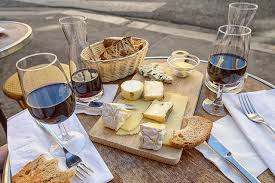
There’s a reason Istrian tables always have both food and wine on them at the same time, never one waiting for the other. The two have been developing alongside each other on this peninsula for thousands of years, shaped by the same soils, the same climate, the same culinary instincts. The pairings that work here aren’t the result of sommelier theory — they’re the result of generations of people eating well and paying attention. Here’s what they’ve figured out.
Start With the Grape, Not the Rule
The standard wine-pairing rules — white with fish, red with meat — are a starting point, but they don’t quite capture how Istrian wine and food actually interact. The better approach is to start with the character of the grape and work outward. Istria’s two signature varieties, Malvazija Istarska and Teran, have such distinct personalities that understanding them unlocks most of the pairing decisions you’ll face at an Istrian table.
Malvazija: The Pairing Workhorse
Malvazija Istarska is the white wine that defines the peninsula, and its versatility at the table is the main reason it became so dominant. Depending on how it’s made, it can range from light, crisp, and citrusy to rich, textured, and nutty — with everything in between. That range makes it adaptable in a way that few single grape varieties are.
With seafood, Malvazija is close to unbeatable. Adriatic fish — branzino, sea bream, John Dory — prepared simply with olive oil and herbs finds a natural partner in a fresh, unoaked Malvazija. The wine’s acidity lifts the delicate flesh without overwhelming it, and the faint almond note in the finish echoes the sweetness of the fish. For shellfish — oysters from the Lim Fjord, mussels, clams — reach for the youngest, most mineral version you can find.
With pasta and risotto, a medium-weight Malvazija with some texture works well. Fuži with truffles is perhaps the most classic example — the earthy intensity of the truffle and the richness of the egg pasta need a wine with enough body to stand alongside them, but enough freshness not to compete. An orange Malvazija (skin-contact, amber-coloured, with more tannin and complexity) handles truffle dishes particularly well.
With cheese, Malvazija’s stone fruit character makes it a natural match for fresh and young sheep’s cheeses — skuta, younger istarski sir, fresh goat rounds. The wine’s acidity cuts through the fat in the cheese, and the fruit notes complement the milk’s natural sweetness. Avoid pairing Malvazija with very aged or intensely sharp cheeses, where Teran handles the job better.
With wild asparagus, Malvazija is the obvious call. The wine’s grassy, herbal qualities harmonise with šparoge’s bitterness in a way that feels completely inevitable. A fritaja od šparoga and a chilled glass of young Malvazija on a spring morning is an argument for why pairing rules exist at all.
Teran: The Bold Contrast
Teran is Istria’s native red: deep purple, high in acidity, tannic, with an iron-mineral edge and flavours of dark cherry, earth, and dried herbs. It’s not a wine for the faint-hearted, and it’s not a wine that pairs with everything — but when it’s matched correctly, nothing else comes close.
With prosciutto, Teran is the classic regional pairing, and it works for good reason. Istrian prosciutto’s salt and cured fat are cut through by the wine’s acidity, while Teran’s tannins bind with the protein in the meat and soften beautifully. Locals will tell you this is how prosciutto is supposed to be eaten, and after trying it, you’ll struggle to disagree.
With maneštra and slow-cooked dishes, Teran’s rusticity is an asset. Maneštra — the thick bean and vegetable soup that’s a staple of Istrian winters — has earthy, savoury depth that would overwhelm a lighter wine but finds a match in Teran’s mineral intensity. The same logic applies to slow-braised lamb, game, and any dish built around legumes and cured meat.
With aged cheese, Teran’s tannins and acidity make it a partner for harder, sharper cheeses that would flatten a white wine. An aged Paški sir, a mature istarski sir rubbed with olive oil — these need something with enough structure to stand alongside them. A glass of Teran and a piece of aged sheep’s cheese, perhaps with a spoonful of chestnut honey, is one of the great simple pleasures of an Istrian afternoon.
With truffles, the choice between Malvazija and Teran depends on the dish. White truffle on pasta or eggs tends to suit an orange Malvazija or a structured white. Black truffle, especially in slow-cooked preparations or with red meat, is a better match for Teran — the wine’s earthiness converges with the truffle’s rather than competing with it.
The Rest of the Cellar
Malvazija and Teran dominate, but they’re not the whole story. Muškat Momjanski — a delicate, grapey, low-alcohol white from the area around Momjan — is one of Istria’s most charming wines and one of its most food-specific. It’s made for desserts and sweet pastries: fritule and kroštule, honey biscuits, fruit tarts. The wine’s gentle sweetness and perfumed character lift these dishes without drowning them in sugar.
For grilled fish and lighter vegetable dishes, some producers make a Pinot Grigio or Chardonnay that’s worth seeking out — particularly the leaner, more mineral styles that reflect the Istrian terroir rather than trying to replicate something Burgundian or Alsatian. These work well at lunch, in warm weather, when you want something with less weight than Malvazija.
Rosé from Teran grapes — pale, dry, with a mineral edge — sits between the two worlds nicely. It’s versatile at a mixed table, handles grilled fish and shellfish better than Teran does, and has enough structure for antipasto plates of prosciutto, cheese, and olives. More Istrian producers are taking rosé seriously than used to be the case, and the quality has improved accordingly.
A Few Rules That Actually Hold
If you want a framework rather than dish-by-dish guidance, these principles work consistently in an Istrian context. Match weight to weight: a delicate dish needs a lighter wine; a rich, slow-cooked dish needs structure. Lean into regional harmony: what grows together goes together, which in Istria means local wines with local food almost always makes sense. Don’t overthink olive oil: Istrian cooking is built on olive oil, and the good news is that both Malvazija and Teran handle it well — the acidity in both cuts through fat effectively.
And finally: the best pairing is the one in front of you. Istrian wine and food have been eaten together long enough that even an approximate match will be better than a technically correct pairing from somewhere else. Order what the konoba recommends, drink what’s local, and trust that the peninsula has already done the hard work of figuring out what goes with what. It mostly has.
 Istria.me
Leave a comment