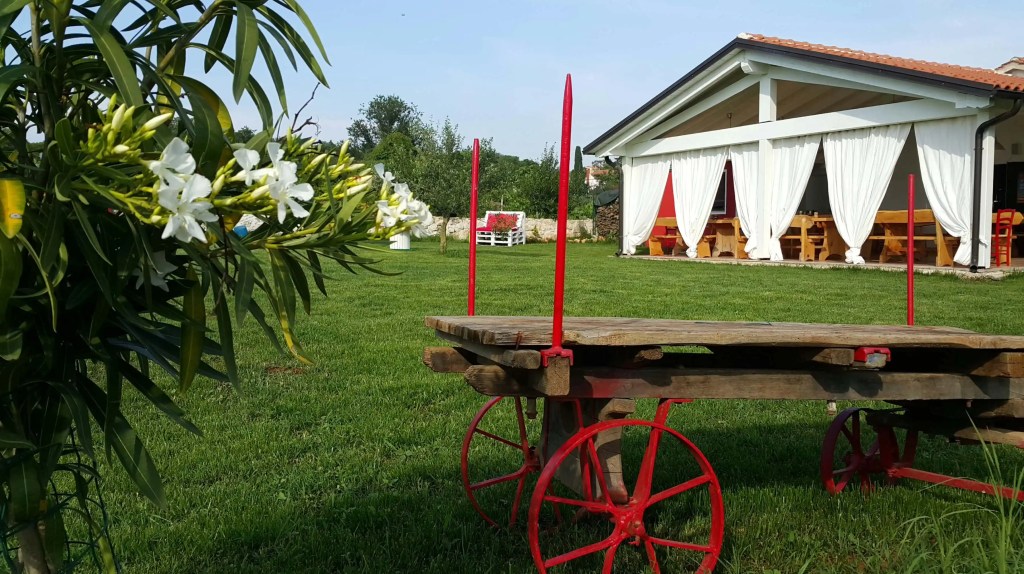
There’s a particular kind of lunch that happens in Istria that you won’t find anywhere else. You pull off a small road somewhere in the interior, follow a handwritten sign to a stone farmhouse, sit down at a long wooden table under a pergola of grapevines, and spend the next three hours eating food that was grown, raised, or foraged within walking distance. The wine is from the property. The olive oil is from the property. So is the prosciutto, the cheese, the vegetables, and probably the grappa that appears at the end without being ordered. This is agriturismo, and in Istria it’s done exceptionally well.
What Agriturismo Actually Means
The term agriturismo comes from Italian — Istria was part of Italy until 1947, and Italian culinary and agricultural vocabulary is still woven through the local culture. An agriturismo is a working farm that hosts guests, either for meals, accommodation, or both. The defining principle is that the farm must genuinely produce what it serves. It’s not a restaurant that has called itself a farm; it’s a farm that also feeds people.
In Croatia the equivalent term is seoski turizam (rural tourism) or agroturizam, and the legal framework requires that a significant portion of what’s served must come from the farm’s own production. In practice, the best Istrian agroturizmi go well beyond the legal minimum — they’re places where the owners are genuinely proud of what they grow and want you to taste it, where the menu changes with the season because it has to, and where the cooking is the kind you don’t learn in culinary school because it was never written down.
What to Expect When You Arrive
Most Istrian agroturizmi don’t take walk-ins — call ahead, sometimes a day or two in advance, sometimes more in peak season. When you arrive, you’ll typically find a fixed menu rather than à la carte choices, because the kitchen is cooking what’s ready and what makes sense that day. This is not a limitation; it’s the point. Trust it.
A typical meal might open with a spread of house-cured prosciutto, local cheese, olives from the property’s trees, and bread still warm from the oven. Then pasta — often fuži or pljukanci made that morning, with a sauce built around whatever’s in season: truffles in autumn, wild asparagus in spring, wild mushrooms after the rains. Then a main of roasted lamb or pork, or perhaps grilled fish if the farm is near the coast. Everything dressed with the house olive oil. A dessert of fresh skuta with local honey. Wine poured freely and refilled without being asked.
The pace is unhurried in a way that can feel disorienting if you’re used to restaurant dining. Courses arrive when they’re ready. The family might sit with you and talk. The afternoon passes. This is not inefficiency — it’s the meal working as intended.
The Seasonal Rhythm
The best reason to visit an Istrian agriturismo is the same reason to visit Istria itself: the food calendar. Spring brings wild asparagus, young lamb, the first tender vegetables from the kitchen garden. Summer means tomatoes and courgettes, grilled fish, cold Malvazija in the shade. Autumn is the peak — truffle season, grape harvest, the mushroom flush after the September rains, walnuts, figs, the first pressing of new olive oil. Winter is quieter but the food is the most comforting: slow-cooked maneštra, braised meats, root vegetables, aged cheeses.
Visiting during the olive harvest in November — when many farms press their olives and you can taste oil that’s days old, bright green and almost spicy — is one of the most memorable food experiences the peninsula offers. Some agroturizmi organise harvest participation: you can pick olives in the morning, eat lunch at the farm, and leave with a bottle of oil that you helped make. There’s no better souvenir.
Finding the Right Agriturismo
The Istrian interior is the main agriturismo territory — the area around Motovun, Grožnjan, Buzet, Oprtalj, and the Mirna River valley is particularly rich. These are the hills where the truffle traditions are strongest and where small family farms have been operating for generations. The food and wine culture here is deeper and less tourist-facing than on the coast, and the agroturizmi reflect that.
The best way to find good ones is through local recommendation rather than booking platforms. Ask at your accommodation, ask at the market, ask the person selling you olive oil where they’d go for lunch. The places worth visiting don’t need to advertise much because their regulars keep coming back and bring friends. That said, a few have built enough of a reputation that they’re searchable — look for places that describe their own production specifically (their own pigs, their own vines, their own olive grove) rather than those that use vague farm-adjacent language.
If you’re staying in one of the larger towns on the coast, agriturismo lunches work well as day trips. Drive inland in the morning, spend the afternoon at the farm, drive back in the evening. The contrast between the coastal tourist scene and the quiet of the interior is striking, and the meal in between makes the whole day coherent.
Staying Overnight
Many Istrian agroturizmi also offer rooms, which changes the experience considerably. Staying overnight means breakfast the next morning — farm eggs, homemade jam, fresh bread, more of that cheese — and the chance to watch the farm wake up before the lunch guests arrive. It means being there for the evening when the cooking smells drift out from the kitchen and the family sits down after a day’s work. It means, in short, being a guest rather than a customer, which is a different and better thing.
Rooms at working farms are rarely luxurious in the hotel sense — expect clean, simple, comfortable spaces, often in converted outbuildings or stone farm structures. The value is not in the thread count; it’s in waking up to a view of vines and olive trees and knowing that dinner tonight will be better than anything you could book at a restaurant. For travellers who care more about how food is grown and made than about spa facilities, it’s the most satisfying accommodation choice in Istria.
A Note on the Experience
Istrian agriturismo is not a performance of rural life for tourists. The farms are real working operations, and the hospitality is the kind that comes from people who are genuinely glad you’ve come to eat what they’ve made, not from people who have been trained to project gladness. This means the experience can feel a little unpolished compared to a restaurant with a trained front-of-house team. Dishes might arrive in a different order than expected. The host might disappear for twenty minutes because something needed attention outside. The wine might be poured into whatever glasses are to hand.
None of this matters. In fact, it’s part of why the meal is better than what you’d get elsewhere. The food on the table came from the fields outside the window. The people serving it grew it. That’s not something you can replicate with a larger kitchen and a better reservations system. It’s the whole point of coming to Istria in the first place — to eat food that couldn’t have come from anywhere else, made by people who couldn’t imagine making it differently.
 Istria.me
Leave a comment