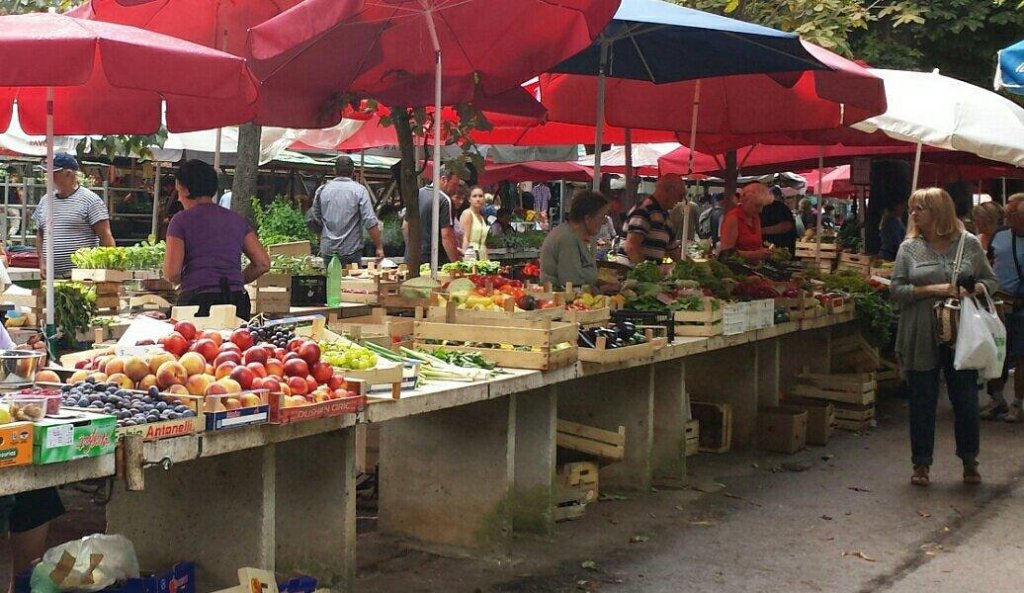
There’s a particular satisfaction to buying food at a market that you don’t get anywhere else. The person selling you the cheese made it. The person selling you the asparagus picked it this morning. You can ask questions, taste before you buy, and leave with a bag of things that couldn’t have been assembled anywhere else. Istria’s markets are small by the standards of large cities, but the quality of what passes through them reflects a peninsula that still takes food production seriously. Here’s where to go.
Pula Central Market: The Benchmark
If you only visit one market in Istria, Pula’s central market is the one. It’s the largest on the peninsula, housed in a nineteenth-century covered hall near the old town, and on a weekday morning it offers the most complete picture of what Istrian food production looks like. Fish from the overnight catch, cheese from inland farms, seasonal vegetables, honey, olive oil, prosciutto, foraged herbs and wild greens when they’re in season. Come before ten; the best vendors sell out.
The fish hall is worth a separate visit even if you’re not buying — the Adriatic species on display are a reminder of how biodiverse this sea is. Dentex, scorpionfish, John Dory, sea urchins, small cuttlefish, several sizes of shrimp. The fishmongers know their stock and will tell you what came in that morning if you ask. In season, you’ll also find wild asparagus and other foraged ingredients at the vegetable stalls — the market is where local foragers sell what they’ve gathered, which makes it a useful seasonal barometer.
Rovinj Market: Compact and Well-Curated
Rovinj’s daily market sits near the harbour, compact enough to cover in twenty minutes but reliably well-stocked. The town’s tourist economy means vendors here are practiced at dealing with visitors who don’t speak Croatian, and prices are clearly marked on most stalls. What makes Rovinj’s market worth visiting is the quality of the local cheese and olive oil vendors who set up regularly — a few of them are producers from the surrounding hills who sell direct, which means you’re buying from the person who made it.
The Rovinj market is also a good place to find dried herbs, lavender, and locally made preserves — the kinds of things that travel well and make good gifts. In summer the stalls spill beyond the main area and the range expands; in the shoulder season it’s quieter but the core vendors are still there. Go early if you want the best of the fish; the afternoon market is more about produce and preserved goods.
Poreč Market: Everyday Istria
Poreč has two market spaces that operate on slightly different rhythms. The daily covered market near the old town handles the everyday grocery trade — vegetables, fruit, eggs, cheese, the staples of Istrian cooking. The open-air market that runs on certain mornings nearby is larger and more varied, with more specialist vendors including a few who come specifically from the interior with honey, olive oil, and seasonal foraged produce.
What Poreč’s market does well is the everyday. This isn’t primarily a destination for food tourists — it’s where locals shop, which means the prices are honest and the range reflects what’s actually in season rather than what’s picturesque. If you’re self-catering during your stay, this is the market to use. If you want to put together a cheese and charcuterie picnic with good local ingredients at sensible prices, start here.
Buzet: The Truffle Market Town
Buzet is the main town of the Mirna River valley — the heartland of Istrian truffle country — and its market reflects that. During truffle season (September through January, peaking in October and November for white truffles), you’ll find vendors in Buzet selling fresh truffles by weight, truffle-infused products, and the full range of preserved goods that the truffle trade has generated. It’s the most concentrated truffle shopping experience outside of the specialist shops, and the prices are lower than anything you’ll find in the coastal towns.
Beyond the truffle season, Buzet’s market is a good window into the interior food culture — more rustic and less tourist-oriented than the coastal markets, with vendors selling dried beans, pickled vegetables, homemade rakija (fruit brandy), and the kinds of preserved products that Istrian families make at the end of the summer. It runs on weekend mornings in the lower town; the upper hilltop town has a smaller informal market on Saturday mornings where a handful of producers sell direct.
Motovun and the Hill Town Markets
Motovun, Grožnjan, and the other hilltop towns of central Istria don’t have permanent daily markets, but they host seasonal and festival markets that are worth planning around. Motovun’s summer film festival period brings food vendors into the lower town. Grožnjan — the artists’ village — has occasional craft and food markets that combine local produce with the work of the resident artisans. And several of the inland towns host harvest festivals in autumn where local producers gather to sell the season’s output: wine, olive oil, honey, cheese, dried goods.
These festival markets are worth seeking out specifically because they aggregate producers who don’t normally sell in one place. A Saturday morning at a small-town harvest fair in October can yield olive oil from a producer who sells maybe a hundred litres a year, honey from a beekeeper who never comes to the coast, and aged sheep’s cheese from a farm that doesn’t have a website. This is where Istrian food culture is most intact and least performative.
What to Buy and What to Look For
A few buying principles that hold across all Istrian markets. For honey, look for domaći med (homemade honey) and ask to taste; any serious vendor will expect it. For cheese, seek out ovčji sir (sheep’s cheese) from the inland stalls rather than the generic packaged varieties at the front of the covered markets. For olive oil, ask when it was pressed — fresh-harvest oil from the previous November will taste very different from oil that’s been sitting for a year.
Fish is best bought early and with a clear plan — Adriatic fish is exceptional but doesn’t keep, so only buy what you can cook that day. For truffles, whether buying fresh or preserved, avoid the tourist-facing shops near the main squares and go to the market vendors or the specialist producers; the quality difference is significant and the price difference usually isn’t as large as you’d expect.
And carry cash. Not all market vendors have card readers, particularly the smaller producers who set up occasionally rather than daily. An ATM visit before the market is good practice. So is bringing a bag — the best market shopping in Istria is done without a plan, which means you need somewhere to put things as you go.
The Market as Orientation
The first thing we’d recommend to anyone arriving in Istria is to go to a market before you go to a restaurant. Not to buy anything in particular — just to look at what’s there. The stalls tell you what’s in season, which means they tell you what to order in the konoba that evening. Wild asparagus at the vegetable stall means fritaja and pasta on the menu. Fresh truffles at the speciality vendor means the season is open and the hunting has been good. New-season olive oil means the harvest happened and the mills have been running. The market is a calendar, a menu preview, and the best free orientation to the Istrian food year you’ll find anywhere.


Leave a comment